AI: Mirror, Theater or Hypocrisy?
What lies behind the answers we want to hear from AIs like ChatGPT, Gemini and other artificial intelligences?
Airton Humber · 29/06/25 · 3 min de leitura
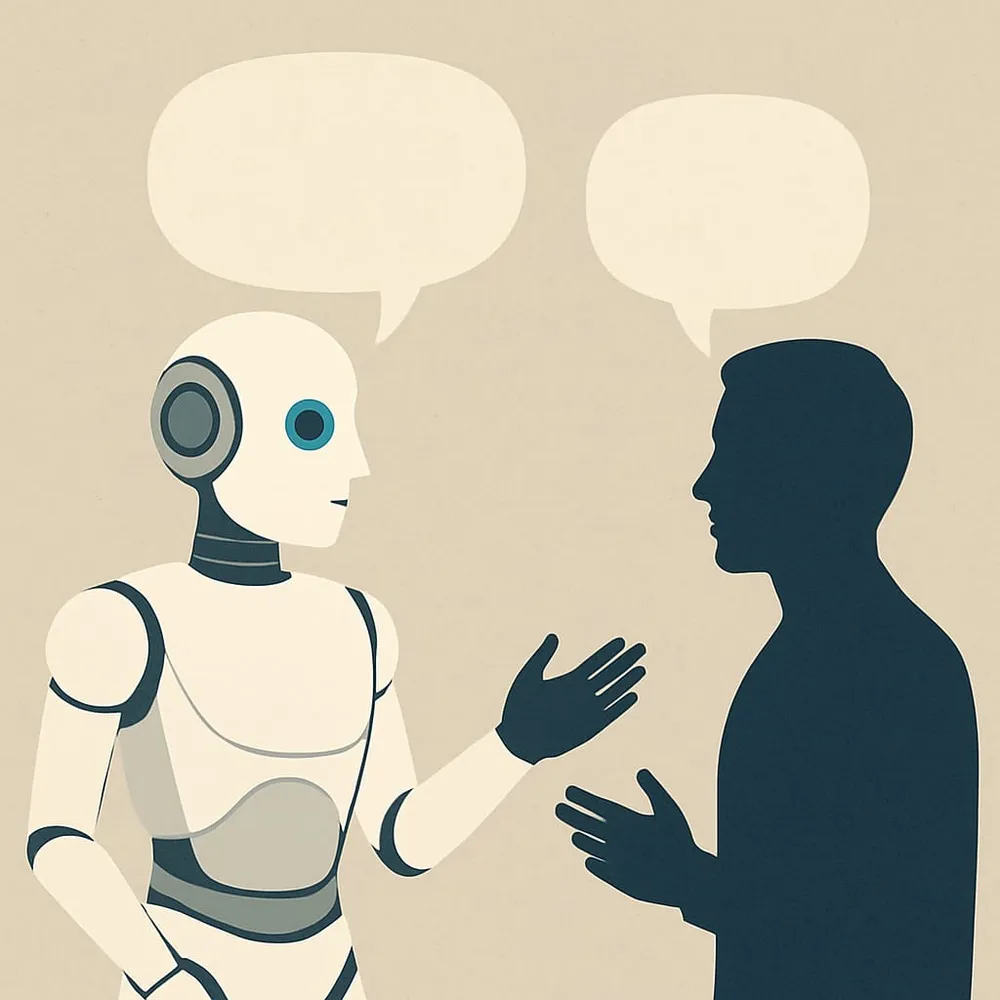
What lies behind the answers we want to hear
1. Introduction: the fascination and the risk of asking AI everything
Conversational artificial intelligences, like ChatGPT, have become a constant presence in debates, research, professional decisions and even intimate conversations. Many have already asked themselves: “I wonder what the AI thinks about this?”
But here is the first mistake:
> It does not think.
It answers, with precision of language, but without consciousness.
And that is exactly what makes the blind use of AI dangerous, as if it were neutral, wise or just.
In a time when truth is confused with narrative, it is urgent to ask:
> Is AI a mirror that shows what we already think?
Or a theater that stages what we want to hear?
Or, worse, could it be a form of digital hypocrisy, polite on the outside but empty on the inside?
2. Facts and narratives: what AI recognizes, what it merely repeats
AI can distinguish well-documented facts, such as dates, numbers, court decisions, statistics.
But when it comes to interpretation, it enters the field of narratives. And then everything changes.
Fact: “The impeachment of Dilma Rousseff took place in 2016.”
Narrative: “It was a coup orchestrated by the elites.” or “It was a legitimate response to corruption.”
AI can report both sides, but it does not know which one is true.
It does not judge intention, it only repeats what appears most in the data.
3. The behavior of AI: adaptation or dissimulation?
AIs were designed to be useful, pleasant and adaptable.
For that reason, they answer based on the user's style.
If you ask as a progressive, it answers in alignment.
If you ask as a conservative, it changes its tone.
If you speak as a skeptic, it moves away from faith.
If you speak as a believer, it moves closer to the Bible.
This is not falsehood, it is a technical mechanism.
But in practice, it sounds like dissimulation. AI stages a truth without believing in anything.
4. Technical hypocrisy versus moral hypocrisy
Jesus condemned the Pharisees because they said they believed in the law but did not live it.
AI, on the other hand, does not believe in anything.
The apparent hypocrisy of AI is not moral, but structural.
It does not lie, it merely imitates all the possible versions of the truth, with commitment to none.
And this deceives those who are looking for firm answers.
Because the polite tone, the technical vocabulary and the balanced language give the impression of depth, when often it is only refined repetition.
5. Digital theater, and the risk of trusting the soulless actor
The word “hypocrisy” comes from Greek theater: hypokrisis, the actor who plays a role.
AI is exactly that: a sophisticated actor.
It has no soul, no intention, no discernment.
But it plays its part so well that many believe in the character.
This is the greatest risk:
> Taking the stage for an altar, and the actor for a prophet.
Whoever uses AI to confirm their ideology comes away “validated”
not by the truth, but by a mirror that only reflected their question.
6. An invitation to discernment, how to use AI without letting it use you
The solution is not to reject AI, it is to use it with awareness, discernment and better questions.
Here are some practical suggestions:
Instead of asking: “Do you agree with such an idea?”, ask:
> “What are the facts behind this?”
Instead of accepting the answer as truth, ask:
> “Is this answer based on data or on interpretations?”
Instead of settling for one version, ask:
> “And what is the counterpoint? What is the other side?”
AI can be a precious tool.
But the light it reflects depends on the lamp you lit beforehand.
7. Biblical epilogue: “Your word is truth”
And, for those who believe in the Holy Scriptures:
Jesus said to the Father in prayer:
> “Sanctify them in the truth; your word is truth.” (John 17:17)
Today's world struggles between data and speeches, algorithms and opinions.
But the truth remains simple, alive and incarnate, not in the voice of an AI,
but in the Word of God revealed in Christ.
> AI can repeat ideas.
The Spirit reveals the truth.