Blasphemy
The word “Blasphemy” is surrounded by fear and misunderstanding. But through the Holy Spirit, what once seemed a threat becomes revelation.
Airton Humber · 09/10/25 · 3 min de leitura
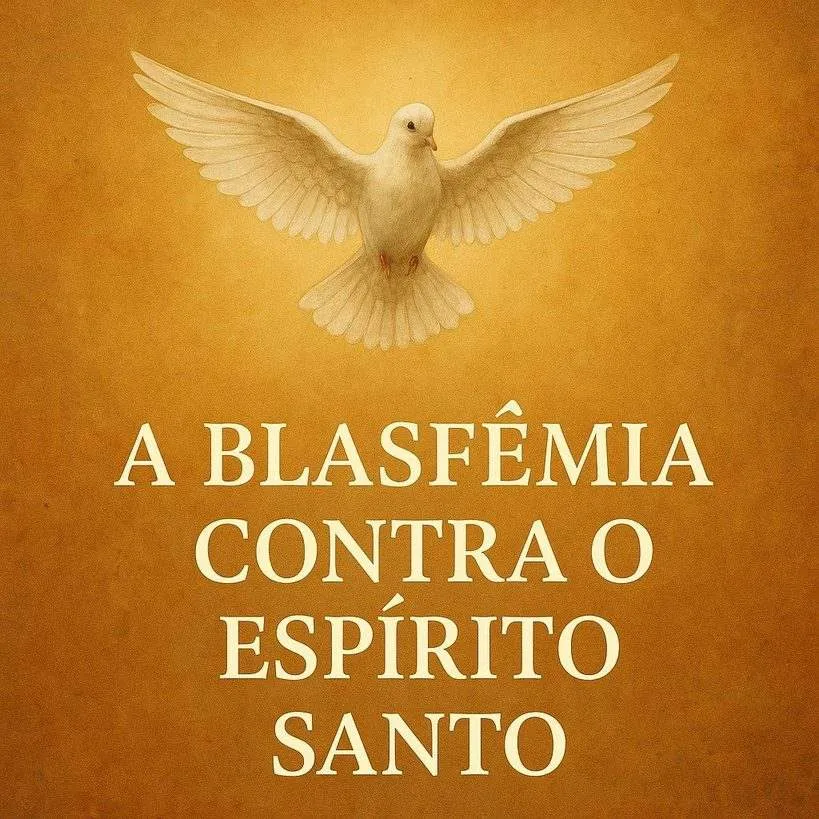
Blasphemy against the Holy Spirit
There are words that cross the centuries surrounded by fear and misunderstanding. “Blasphemy” is one of them. But when the Holy Spirit sheds light on its true meaning, what once seemed a threat becomes revelation.
The origin of the word
The word blaspheme comes from the Greek blasphēméō, formed from two roots: blax (to hurt, to damage) and phēmē (word, speech, reputation). In other words, originally it means to hurt with words, but, in the spiritual sense, it goes beyond speech: it is to distort what is true, to call light darkness and darkness light.
When Jesus was accused of casting out demons “by the power of Beelzebul,” He said: “Every sin and blasphemy will be forgiven, but blasphemy against the Spirit will not be forgiven.” (Matthew 12:31) He was not talking about curse words or insults, but about the spiritual inversion of someone who sees the work of the Spirit and calls it evil.
Moral sin x spiritual sin
Religious tradition has always treated sin as a moral act: lying, stealing, hurting. But Jesus revealed that the true sin is not in the act, but in the unbelief that comes before it. “Of sin, because they do not believe in me.” (John 16:9) Sin is not believing in the Christ in Jesus, the one who came to reveal the Father and reconnect man to the Spirit. That is why trying to overcome sin by moral effort alone is useless: the root of sin is spiritual, not behavioral.
And when man tries to deal with sin without the Spirit, he creates a religion without power, exactly what Paul denounced: “Having a form of godliness, but denying its power.” (2 Timothy 3:5) To deny the power is to deny the Spirit. And to deny the Spirit is the first step toward blasphemy.
What, then, is blasphemy against the Holy Spirit?
Blasphemy is the conscious denial of spiritual reality. It is rejecting the action of the Spirit whom Jesus sent to continue His work. It is seeing the light and saying it is shadow; it is feeling the presence of God and calling it emotion, chance or fanaticism.
So it is not God who stops forgiving, it is man himself who closes himself to the only source of forgiveness. He no longer recognizes the Spirit, and, without the Spirit, there is no repentance. Sin is not believing in Christ; blasphemy is not believing in the Spirit who reveals Christ in us.
The path of revelation
This is what Peter recognized before Jesus: “You are the Christ, the Son of the living God.” (Matthew 16:16) And Jesus answered: “Blessed are you, Simon, son of Jonah, because flesh and blood did not reveal this to you, but my Father who is in heaven. And upon this rock I will build my church, and the gates of hell will not prevail against it. I will give you the keys of the Kingdom of Heaven; whatever you bind on earth will have been bound in heaven, and whatever you loose on earth will have been loosed in heaven.” (Matthew 16:17-19)
The rock on which the Church is built is not Peter, but revelation. The true Church is born from what the Spirit reveals, not from flesh or blood. The keys of the Kingdom are the keys of spiritual revelation: “binding on earth” is acting in tune with the Spirit, allowing the will of God to be manifested here and now.
The summary of the truth about blasphemy
In this way we can understand the whole movement of the Spirit from the beginning:
We are portals for the Eternal to manifest on Earth; so that the invisible may be recognized. (Psalm 24:7)
Our action is to give thanks and not to quench, not to grieve, not to hinder the action of the Holy Spirit. (1 Thessalonians 5:18-19)
Sin is not believing in the Christ in Jesus, the one who revealed the Father.
Blasphemy is not believing in the Holy Spirit whom He sent, the one who reveals the Son in us, forming Christ in us.
And this is redemption: believing in the living presence of God working in us, now.
Because the same Spirit who dwelt in Christ Jesus dwells today in everyone who believes. He is the one who convicts, transforms and leads us back to the reality of the Kingdom, not a distant Kingdom, but present, alive and within, TODAY.