Wine Gladdens the Soul
A reflection on the old wine, the new wine and the miracle that points to Christ in us, TODAY, a new reality through the Spirit.
Airton Humber · 06/09/25 · 5 min de leitura
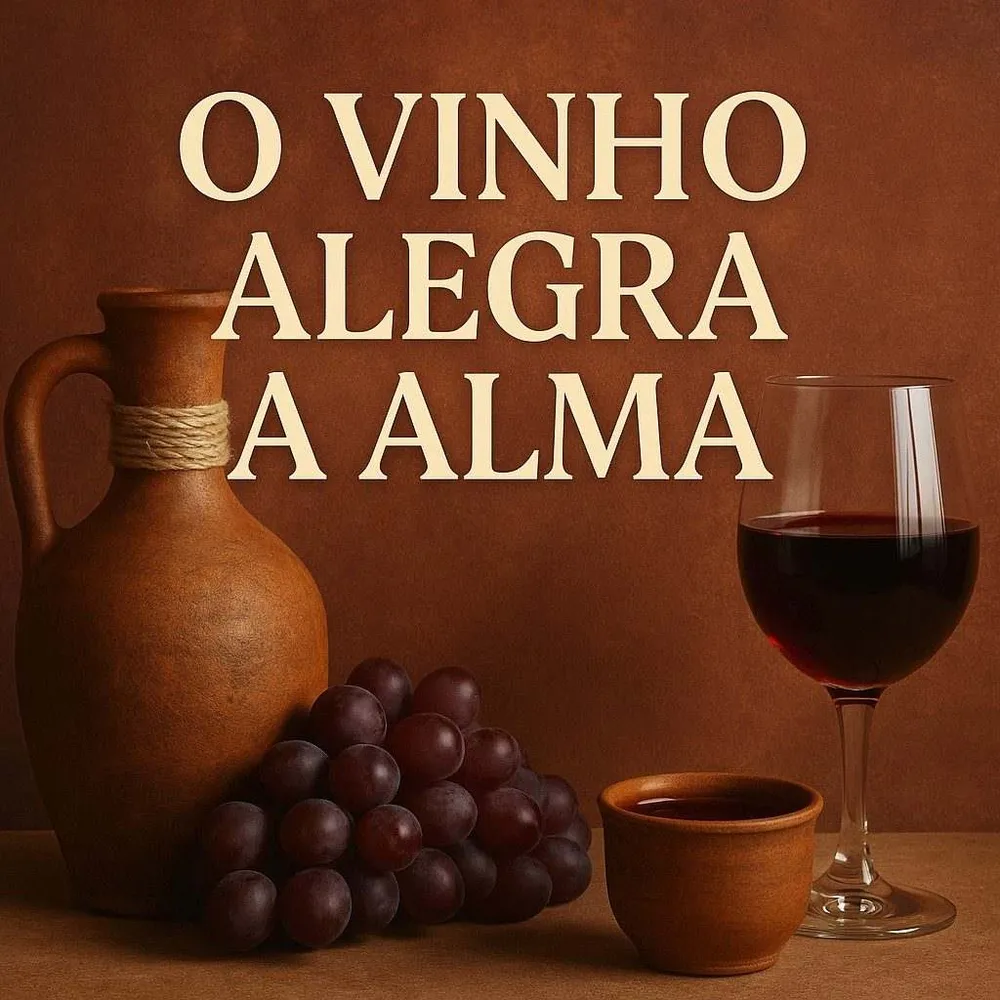
A reflection on the old wine, the new wine and the miracle that points to Christ in us TODAY, a new reality through the Spirit.
1) The teaching of Jesus
“No one puts new wine into old leather wineskins; if he does, the new wine will burst the wineskins, it will be spilled, and the wineskins will be ruined. On the contrary, new wine must be put into new leather wineskins. And no one, after drinking the old wine, prefers the new, for he says: ‘The old wine is better’.” Lk 5:37–39
This simple and profound teaching shows that God's new thing does not fit into old human structures. New wine requires new wineskins.
2) Old wine and new wine
- Today, the old wine represents Christ in Jesus: the work accomplished in the past, perfect, but still as history, as a fact seen and witnessed.
- The new wine represents Christ in us: the continuation of that work, the Holy Spirit poured out on all, so that the life of Christ may be multiplied in every human being.
Just as new wine needs new wineskins, Christ in us requires a new inner disposition: a regenerated, flexible heart, able to contain the newness of the Spirit.
Old wineskins keep only the memory. New wineskins receive the life of the Spirit today.
3) Attachment to traditions: feasts, symbols and images
Jesus ends by saying that “no one, after drinking the old wine, prefers the new”.
This sentence reveals the power of attachment to traditions: it is more comfortable to look at the historical Christ, to remember feasts and symbols, than to experience the newness of the living Christ in us.
After drinking the old wine, many say: “the old is better.” It is attachment to the familiar. We see this when faith is reduced to symbols and feasts:
In practice, this is what we still see:
-
We celebrate Santa Claus in place of the coming of Christ.
-
We celebrate the Easter bunny instead of the resurrection.
-
We celebrate the child God, stuck in the manger.
-
Or the dead Christ, fixed on the cross.
These are all signs that many still prefer the old wine.
But the new wine is more than memory, it is presence. Christ is not bound to the past, nor to the cross, nor to the nativity scene. He is alive in us.
It is like a Palmeiras fan arguing with a Corinthians fan about which team is better.
There is no meeting point, because each one defends his own shirt, his own tradition, his own label.
In the same way, there is no way to fit the new wine of the Spirit inside the old wineskins of religious traditions.
4) A gentle word about the worship of images
With respect and without aggression:
Many still prefer to cling to images of saints, crucifixes or religious representations. They may even have been created with good intentions, but they become a prison when they replace the living experience of the Spirit.
The new wine, which is Christ in us, does not fit in these old wineskins of stone, plaster or tradition. He wants to dwell in living hearts, not in still images.
5) The grain of wheat: dying to the old, being born to the new
“Unless a grain of wheat falls to the ground and dies, it remains alone. But if it dies, it bears much fruit.” Jn 12:24
This is exactly the movement of the new wine:
-
Christ in Jesus was the grain of wheat that fell to the ground and died.
-
If He had not died, He would have remained alone.
-
But, by dying and rising again, He opened the way for many to be born of Him, by the Spirit.
And the same is true for us: we need to die to the world and be born again in the Spirit. Only then will we not remain “alone”, but bear the fruit of life: Christ formed in us.
6) Being born again: the condition to see and enter the Kingdom
-
The new wine is Christ in us.
But to receive it, it is not enough merely to admire Christ in Jesus, nor to live bound to images, symbols or traditions. -
It is necessary to be born again.
To be born of water and of the Spirit means to leave behind the natural life, tied to the world, and receive the life of the Spirit, which makes us new wineskins. -
Whoever is not born again cannot see the Kingdom of God (Jn 3:3).
-
Whoever is not born of water and of the Spirit cannot enter the Kingdom of God (Jn 3:5).
Only new wineskins can hold new wine. Without being born again, we stay in the memory of the historical Christ. Being born of water and of the Spirit, we experience Christ alive, in us, today.
7) When there is no wine
A large part of the religious tradition not only rejected the new wine (Christ in us), but also rejected even the symbol.
Alcoholic drink was condemned, wine was banished from the table and, with that, even the memory of the wine that gladdens the heart (Ps 104:15) was lost.
In other words:
-
The old wine (Christ in Jesus) was reduced to rites and memories.
-
The new wine (Christ in us) was smothered, because it breaks structures.
-
And, in many cases, all that was left was a “dry worship”, with no wine at all, no joy, no life.
8) The first miracle of Jesus
The deep meaning
-
Jesus did not begin by forbidding, but by offering joy.
The wine of the feast ran out, and He brought new wine, better than the first.
This already pointed to the future reality: the old wine (the law, tradition, Christ in Jesus) would come to an end, and He would bring the new wine (Christ in us), which surpasses it in quality and abundance. -
Water into wine is the symbol of the new birth.
Water purifies on the outside, but wine gladdens and transforms on the inside.
It is what He explained to Nicodemus in John 3: to be born of water and of the Spirit. -
Without wine there is no feast.
Religion may have rites, doctrines and even an appearance of holiness. But without wine, neither old nor new, spiritual life becomes dry, without joy, without fullness.
“… and Jesus turned the water into wine.” Jn 2: 1-11
The first miracle was not healing, casting out or raising the dead, but turning water into wine. He did not abolish wine, but restored it in abundance and superior quality. It is a sign: the water of purification of the law gives way to the wine of the new covenant in the Spirit.
Without wine there is no feast. But where Jesus is, the wine never runs out. He begins His work by offering wine and ends it by handing over the cup of the new covenant. The wine is not a bottle or a glass: it is Christ in us, the hope of glory.
9) Conclusion
The teaching of Jesus is clear: new wine is for new wineskins. Christ in us does not fit inside the old structures.
The Spirit invites us to be new creatures, not just repeaters of traditions.
- The old wine is foundation and seed, and it was necessary: Christ in Jesus.
- The new wine is presence and fruit, and it is indispensable: Christ in us.
- The old wineskin is traditions that try to contain life.
- The new wineskin is the heart that was born of water and of the Spirit.
So, it is not enough to say “the old is better” nor to abolish wine altogether. It is time to receive the new wine and live the reality of Christ in us.
Because, yes, wine gladdens the soul, and this wine is Christ Himself, alive, in us, on this day called TODAY!
Until now you have asked for nothing in my name. Ask and you will receive, so that your joy may be complete. Jn 16:24
For everyone who asks receives Lk 11:10
the Father who is in heaven will give the Holy Spirit to whoever asks him! Lk 11:13
For if you forgive one another's offenses, the heavenly Father will also forgive you. But if you do not forgive one another, the heavenly Father will not forgive your offenses.” Mt 6:14,15
Therefore, be perfect, as your heavenly Father is perfect. Mt 5:48