Eternal Rome
I heard Eternal Rome only once in my life, at a solemn celebration. And it stayed with me. Most people have never heard this song.
Airton Humber · 17/11/25 · 3 min de leitura
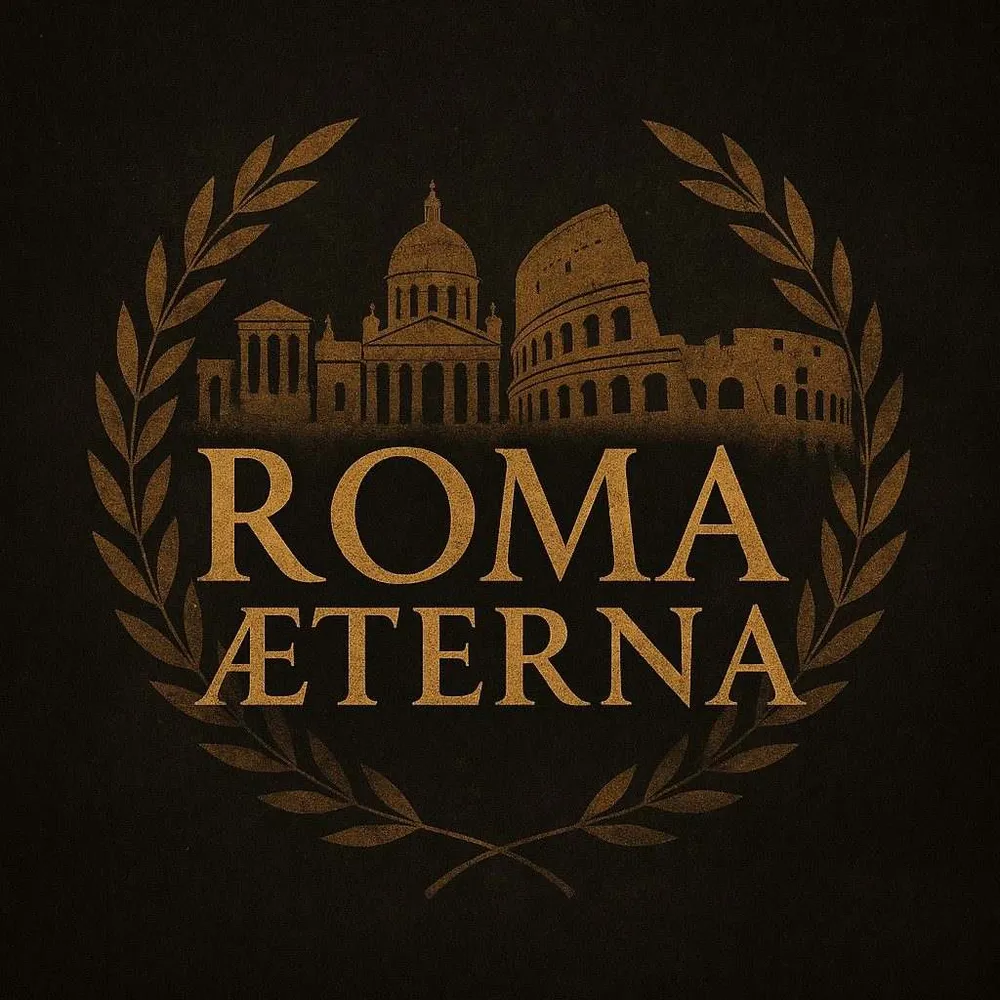
When man tries to sing his own eternity
The song that marked me
I heard Eternal Rome only once in my life, at a solemn celebration, 50 years of episcopate, with several church authorities present, traditions, vestments and rites.
And that melody stayed with me.
Most people have never heard this song.
So it is worth presenting the main passage of its Portuguese version, often sung at moments of great solemnity:
O eternal Rome, of the martyrs, of the saints,
O eternal Rome, receive our songs.
Glory, praise, rises in vibrant tones,
To your name, to your majesty.Rome triumphs, eternal and sovereign,
Rome who inspires and guards the Christian faith.
Our solemn song rises to the heavens,
Eternal Rome, immortal Rome!
The exact translation does not matter.
The spirit is the same: the exaltation of human greatness and eternity.
And that is what lit something inside me.
1. The universal temptation of institutions
Over the years, I came to understand that what I heard at that celebration was not a phenomenon exclusive to the Catholic Church.
Much less to the city of Rome.
It is a human movement.
All institutions, sooner or later, are seduced by the same impulse:
-
to preserve their own name,
-
to protect their own structure,
-
to perpetuate their influence,
-
to assert their authority,
-
to defend their continuity,
-
to seem eternal.
This happens in:
-
Catholic churches,
-
evangelical churches,
-
reformed movements,
-
independent ministries,
-
historic denominations,
-
modern megachurches,
-
religious or political institutions,
-
and even companies.
The impulse is always the same:
man wants to remain.
Not just to live, to remain.
2. Rome as a symbol, not as a target
When Eternal Rome is sung, what echoes is not just a hymn, it is an archetype.
Rome becomes a symbol of what human beings always try to build:
- order,
- solidity,
- power,
- tradition,
- permanence.
But behind this impulse there is a silent fear:
the fear of disappearing.
That is why the song says: eternal Rome.
That is why so many religious systems say: our tradition is eternal.
That is why so many modern churches say: our movement is eternal.
And even companies say: our brand is eternal.
Rome is just the most famous mirror.
But the reflection is universal.
The problem is not Rome.
The problem is the human heart.
3. When the system tries to imitate the Kingdom
Jesus never asked us to build an empire.
He asked us to carry a cross.
He never called us to raise structures.
He called us to allow the Spirit to raise people.
He never gave us an eternal liturgy.
He gave us a living way.
But man does the opposite:
-
he replaces presence with ceremony,
-
he replaces Spirit with protocol,
-
he replaces life with rite,
-
he replaces Christ with institution,
-
he replaces Kingdom with empire.
And this movement does not belong to a specific denomination,
it belongs to human nature when it tries to preserve itself.
4. The inevitable contrast
When I heard Eternal Rome, I realized something spiritual:
The song exalts the permanence of a city,
but the Gospel exalts the permanence of the Spirit.
The song proclaims:
“Our glory remains.”
But Christ proclaims:
“My glory is given, not built.”
The song affirms:
“Rome is eternal.”
The Gospel answers:
“Only what is born of the Spirit remains.”
And this is not a criticism of the Catholic Church,
it is a call to all institutions, including evangelical ones, which so often have built their own empires, their own symbols, their own “eternal Kingdoms.”
The temptation is the same.
The fragility is the same.
Human nature is the same.
5. The revelation that stayed with me
That day, while everyone sang with sincerity and solemnity, something inside me was illuminated:
Eternal Rome is not a city.
It is a human desire.
And this desire reaches me.
It reaches you.
It reaches anyone who has ever sought recognition, authority, security, influence, stability or “permanence.”
Eternal Rome is:
-
in those who need to be applauded,
-
in those who build ministries around their own name,
-
in those who protect the institution more than people,
-
in those who confuse tradition with truth,
-
in those who fear disappearing.
Rome begins within us.
6. The only true eternity
The Bible says:
“The world passes away, and so do its desires;
but whoever does the will of God remains forever.” (1 John 2:17)
Everything human passes away.
Everything institutional passes away.
Everything visible passes away.
But what the Spirit generates,
that remains.
Rome falls.
Babylon falls.
Jerusalem falls.
Denominations fall.
Systems fall.
Traditions fall.
But the living Christ, Christ in us, does not fall.
This is the Kingdom that cannot be shaken.
The only eternity that does not depend on human strength, human structure or human glory.
Conclusion
That song, sung with such solemnity, was not an attack on faith for me,
it was a mirror.
It reminded me that every human system, sooner or later, tries to sing that it is eternal.
But the Gospel reminded me of something greater:
- Only what is born of the Spirit remains.
- Only the invisible Kingdom is eternal.
- And everything human, even what seems most solid, passes away.
That is why Jesus said:
“Seek first the Kingdom of God.”
Because everything that is not born of this Kingdom is Rome.
And Rome, however imposing, is not eternal.
Learn more:
Love and its opposites