God's Rest
Jesus did not call the weary to do more, but to rest. This shift in perspective may change the way we understand the Gospel.
Airton Humber · 23/06/26 · 4 min de leitura
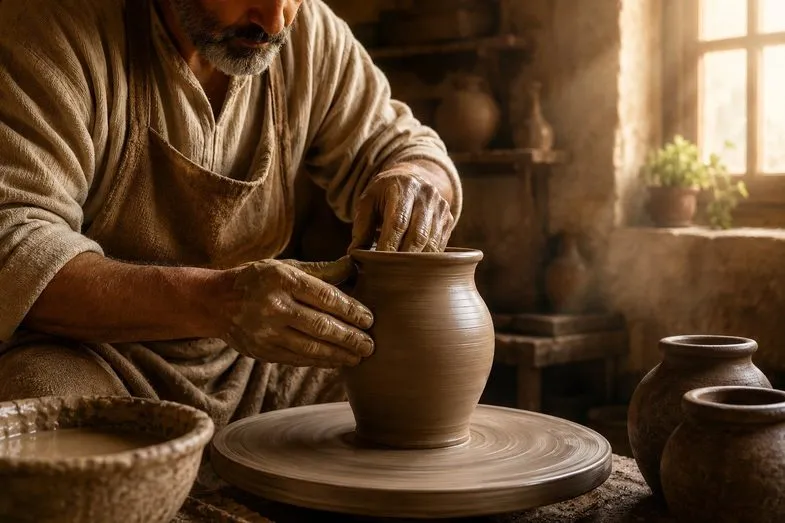
A small subtlety that changes the way we perceive life.
“Come to me, all you who are weary and burdened, and I will give you rest.”Matthew 11:28
A few days ago I published an article titled “Becoming a blessing”.
After publishing it, I kept meditating on the subject.
And I noticed something that, until then, had gone unnoticed by me.
The title itself revealed a way of thinking that I carried for many years.
It was written in the active voice.
As if we became a blessing by our own effort.
Perhaps the Gospel says exactly the opposite.
Perhaps we do not become a blessing.
Perhaps God makes us a blessing.
This small difference seems merely grammatical.
But it profoundly changes the way we read the New Testament, and perhaps life itself.
Jesus' invitation
When Jesus calls people, He does not begin by imposing a new list of tasks.
His invitation is addressed precisely to the weary.
“Come to me, all you who are weary and burdened, and I will give you rest.”Matthew 11:28
Who are these weary ones?
Perhaps they are those who have spent their lives trying.
Trying to change.
Trying to overcome themselves.
Trying to please God.
Trying to produce what only God can produce.
Before offering work, Jesus offers rest.
Repent
The first public message of Jesus was:
“Repent, for the Kingdom of heaven is near.”Matthew 4:17
For a long time we understood repentance only as abandoning certain behaviors.
But the Greek word metanoia points to a change of mind, a change in the way of thinking.
Perhaps Jesus was saying:
“Completely change the way you see life.”
Why?
Because the Kingdom has come.
The King has come.
And when a king arrives, someone begins to rule.
Perhaps the greatest repentance is to stop believing that we are the authors of the transformation of our own lives.
The work of God
One day they asked Jesus:
“What must we do to do the works God requires?”John 6:28
Jesus' answer is surprising:
“The work of God is this: to believe in the one he has sent.”John 6:29
They asked about what they should do.
Jesus answered by speaking of the work of God.
Even faith is born from the encounter with the one whom God sent.
The Spirit continues this work
Later, Jesus promised to send another Comforter.
The Holy Spirit.
And He explained:
“When he comes, he will convict the world of sin, righteousness and judgment.”John 16:8
Then He adds:
“About sin, because people do not believe in me.”John 16:9
The Spirit continues carrying out the work begun by Christ.
He is the one who convicts.
He is the one who awakens.
He is the one who leads.
He is the one who transforms.
That is why Paul writes:
“Do not get in the way of the work of the Holy Spirit.”1 Thessalonians 5:19, NTLH
Later, writing to the Romans, he presents the same truth from another angle:
“Do not live as the people of this world live, but let God transform you through a complete change of your mind.”Romans 12:2, NTLH
Transformation is still necessary.
But the protagonist changes.
It is not we who produce the transformation.
We are transformed by the action of God.
The rest
Perhaps now we can understand a phrase that seems contradictory.
“Let us, therefore, make every effort to enter that rest.”Hebrews 4:11
How can someone strive to rest?
Perhaps the effort is not to produce the work.
Perhaps it is to abandon the need to produce it.
To stop trusting in our own strength.
To rest in the work of God.
Fellow workers
This does not mean passivity.
Paul also writes:
“For we are God's fellow workers.”1 Corinthians 3:9
This word is precious.
We are not spectators.
Nor are we the authors of the work.
We are fellow workers.
Whoever cooperates takes part in the work, but does not take the place of the author.
So it is also in the Kingdom of God.
It is God who begins.
It is God who leads.
It is God who accomplishes.
We cooperate with what He does.
The language of the Gospel
After this realization, I began to notice something curious.
Much of the New Testament seems to lead us toward this language of the passive voice.
We do not justify ourselves. We are justified.
We do not sanctify ourselves. We are sanctified.
We do not produce Christ. Christ is formed in us.
We do not manufacture fruit. We bear fruit because we remain in the Vine.
We do not transform ourselves. We are transformed.
We do not become a blessing. We are made a blessing.
Perhaps for this reason the title of the previous article should have been different.
Not “Becoming a blessing”.
But:
“Being made a blessing.”
The subtlety that changes everything
It is a subtlety.
But a subtlety that changes the way we perceive life.
Sin is no longer seen only as doing wrong things.
It also becomes living as if everything depended on us.
And faith is no longer only believing certain truths.
It becomes trusting the Author of the work.
Perhaps that is why Jesus did not simply say:
“Imitate me.”
He said:
“Follow me.”
To imitate is to try to reproduce.
To follow is to walk behind the one who knows the way.
This difference seems small.
But it completely changes the way we live.
True rest
Perhaps that is why Paul wrote:
“For it is God who works in you both to will and to do, according to his good pleasure.”Philippians 2:13
In the end, the Gospel does not tell the story of people trying to reach God.
It tells the story of God coming to meet human beings.
It tells the story of Christ being formed in us.
It tells the story of the Spirit accomplishing, little by little, what we could never produce on our own.
Perhaps true rest is exactly this.
To stop taking the place of the Author.
To accept, with gratitude, the privilege of being a fellow worker in the work that God has already begun.
Just give thanks…
and let God act.