I still don't understand
Understand why we say, or hear, “I still don't understand” in conversations with close, intelligent and dear people.
Airton Humber · 24/04/25 · 3 min de leitura
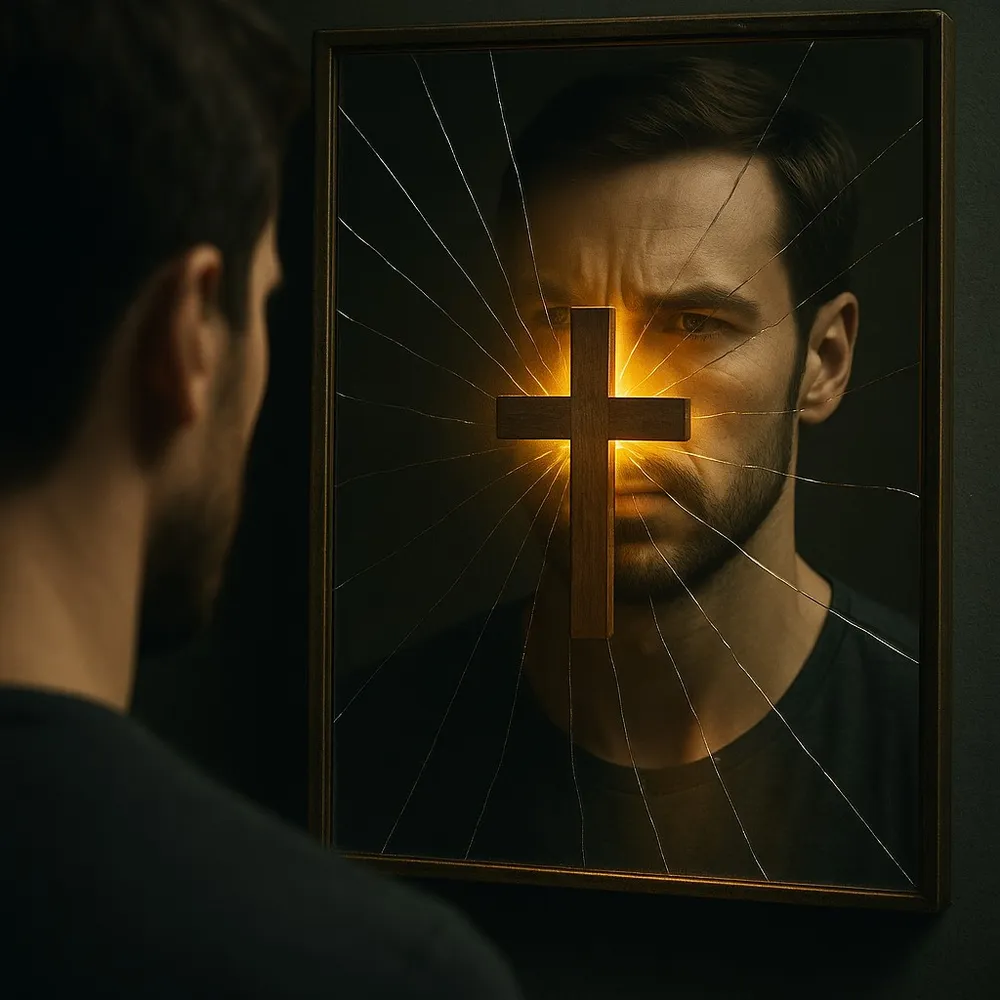
When the cross of Christ remains hidden
I have been living something that keeps repeating.
Conversations with honest people. Dear people. Experienced people.
People of long journeys, who love God, who have studied, who have served.
I speak with affection, with care, with simple words,
but it is as if the message hit an invisible wall.
I speak about the cross of Christ.
And I hear, with painful frequency:
“I still don't understand.”
The cross that almost no one sees
I am not talking about the cross of Jesus.
That one, everyone knows.
The cross of salvation. Of the blood that was shed. Of the forgiveness that was won.
It is sung, celebrated, reproduced in a thousand forms.
But what almost no one sees,
not even those who call themselves mature,
is the cross that is also in us.
The cross Jesus spoke of even before being crucified.
“Whoever does not take up their cross and follow me is not worthy of me.” →
Christ being formed in us
This is the cross that does not stir the emotions.
It has no beautiful preaching.
It has no background music.
It is the cross of emptying.
It is where not only did Jesus die for us,
but where we die with Him.
And this is the cross I try to share.
With zeal. With reverence. With fear and love.
But almost always, the answer comes sincerely, with eyes still veiled:
“I still don't understand.”
And I understand.
Because this pain of those who do not yet see…
has a name in the Scriptures:
“My little children, for whom I am again suffering labor pains until Christ is formed in you.” →
The other day, in a calm conversation with a dear friend, an intelligent, sensitive woman with years of walking with God, I asked her with affection:
If you told your friends, colleagues, acquaintances, that the Holy Spirit is upon you… what would they say?
She stopped. She thought. And she smiled.
And she answered sincerely, half laughing, half embarrassed:
They would say I think too highly of myself…
She knew what I was talking about.
And in that smile there was something beautiful and sad at the same time:
the awareness that we are ashamed to say what Christ Himself won for us.
Not out of unbelief.
But so as not to seem pretentious… before the tradition that shaped us.
And perhaps that is why Jesus said:
“If anyone is ashamed of me and of my words, the Son of Man will be ashamed of him…” →
It is not shame of Jesus, the historical man.
It is shame of Christ, being formed in us.
And because of it, we remain silent.
Afraid.
Veiled.
A living testimony
For years, I did not see either.
But one day, the Spirit opened my eyes, and showed me the cross where I myself was nailed.
And that became a living testimony, which I shared here, on this blog, in the article: Language with authority and Power →
Later on, a new image: a crucified woman: The cross in us →
And once again, I realized how much we are still bound to the idea that the cross belongs only to Jesus,
without realizing that Christ is also being formed in each one of us.
Men and women. Young and old.
The Spirit was poured out on all.
But there are still strongholds.
“The weapons we fight with are not human; on the contrary, they are powerful in God for destroying strongholds. We destroy arguments and every pretension that sets itself up against the knowledge of God…” →
It is not explained. It is revealed.
Christ in us is not a doctrine.
It is a mystery.
And the cross is the door.
“I have been crucified with Christ. So it is no longer I who live, but Christ lives in me.” →
When Paul says he preaches “Christ, and him crucified”,
he is not looking only at Jesus hanging on a piece of wood.
He is looking at the invisible and continuous process that works in each one who believes:
Christ being formed.
The old man being crucified.
The new man rising out of the pain.
First you see. Then you enter.
Perhaps that is why almost no one understands.
Because this is not explained, it is revealed.
But one thing I know:
the Holy Spirit is tearing down these strongholds.
He is opening eyes.
He does not give up.
And when this revelation happens, everything changes.
The sentence stops being:
“I still don't understand.”
And becomes:
“Now I see.”
And after seeing…
comes the invitation to enter.
As Jesus said to Nicodemus:
“Truly I tell you, no one can see the Kingdom of God unless they are born again…
and no one can enter the Kingdom of God unless they are born of water and the Spirit.” →
First you see. Then you enter.
And it all begins when the veil falls…
and the cross that seemed distant now pulses within us.