Is Reading the Bible Really Necessary?
A reflection on reading the Bible and the risk of replacing life with the text: especially for those who have always been inside.
Airton Humber · 04/02/26 · 2 min de leitura
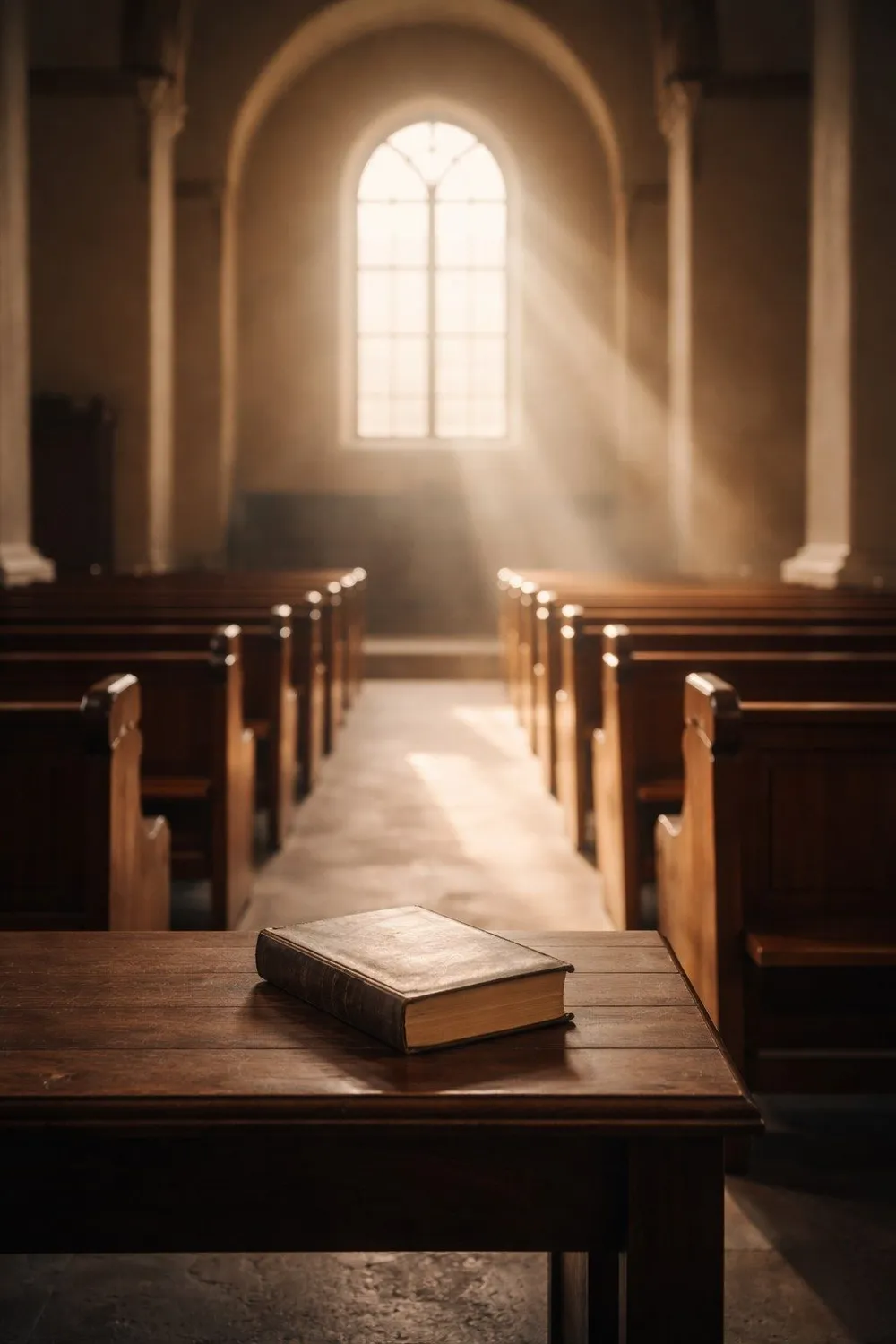
That question may sound strange to someone who has always been inside.
But it is born from something simple:
the honest attempt to discern where the text ends and where life begins.
The Bible never presented itself as an end in itself.
It always presented itself as testimony.
That is why it is possible to know the text well,
master the language,
respect the tradition,
and still realize that something essential was left behind on the way.
The text points.
Life happens.
When the prophet Jeremiah speaks of a new covenant, he does not promise more rules, nor more teaching, nor more letters. He announces a change of place:
the truth stops staying outside
and starts being written within.
It is not about transferring content into the heart.
It is not a spiritual "download."
The one who writes is God.
And what He writes is not information, but life, discernment, conscience, inner direction.
Jesus confirms this when he says that it is the Spirit who gives life,
and that the letter, alone, does not sustain life.
The text then records something unsettling:
upon hearing this, many disciples turned back and stopped following him.
They were not opponents.
They were disciples.
People close to him.
People who walked alongside him.
At the beginning, simplicity enchants.
When someone realizes that faith can be light, that the relationship with God does not have to be heavy, something lights up.
There is relief.
There is joy.
There is rest.
But the old has strength.
Not because it is true,
but because it is familiar.
With time, the old begins to call us back:
the known structures,
the safe language,
the external supports that have always held us up.
Simplicity enchants.
Freedom demands staying.
After many walked away, Jesus does not run after them.
He does not adjust his speech.
He does not try to hold anyone back.
He simply turns to the twelve and asks:
"Do you also not want to go?"
There is no demand in that question.
There is respect.
There is freedom.
Not everyone stays when the text stops being a support
and life begins to demand inner listening.
The Bible, then, does not lose its value.
It changes place.
It stops being the center of life
to become once again a witness to life.
It does not create what God writes on the heart.
It recognizes when that happens.
Perhaps, then, the most honest question is not
whether reading the Bible is necessary.
Perhaps the question is only this:
is it in the right place?
When the text takes the place of life,
even those who are inside end up lost.
Learn more: The simplicity of the Bible